Building Trusted Agents for the Apple Ecosystem: Observability for Swift agentic apps in Production
It has never been faster to build an AI agent. But for businesses, speed was never the real question. What matters is whether an agent can be trusted with real work, real data, and real decisions. As software gains more autonomy, Railtown believes it must become more accountable. Apple already holds apps to that standard through sandboxing, permissions, and privacy built into the platform, and agents built natively inside those apps can inherit it. That’s why we’re bringing Railtown’s observability technology into Swift development and connecting it to Conductr, an agent observability and evaluations platform, in production.
Why Accountability Matters for Agents
Traditional software is largely deterministic. When it fails, you find the line that broke. Agents reason, select tools, generate responses, and take actions. When something goes wrong, there’s often no broken line to find, just an output, a wrong tool call, or a decision no one can explain. Developers need to understand not just whether something failed, but what the agent did, which tools it used, and why it reached that outcome.
From Local Swift development to Production
- Inspect agent executions step by step as you build in Swift
- Understand tool usage and evaluate agent behaviour before shipping
- Diagnose failures with full visibility into each run
- Monitor production agents in Conductr error analysis and root cause analysis
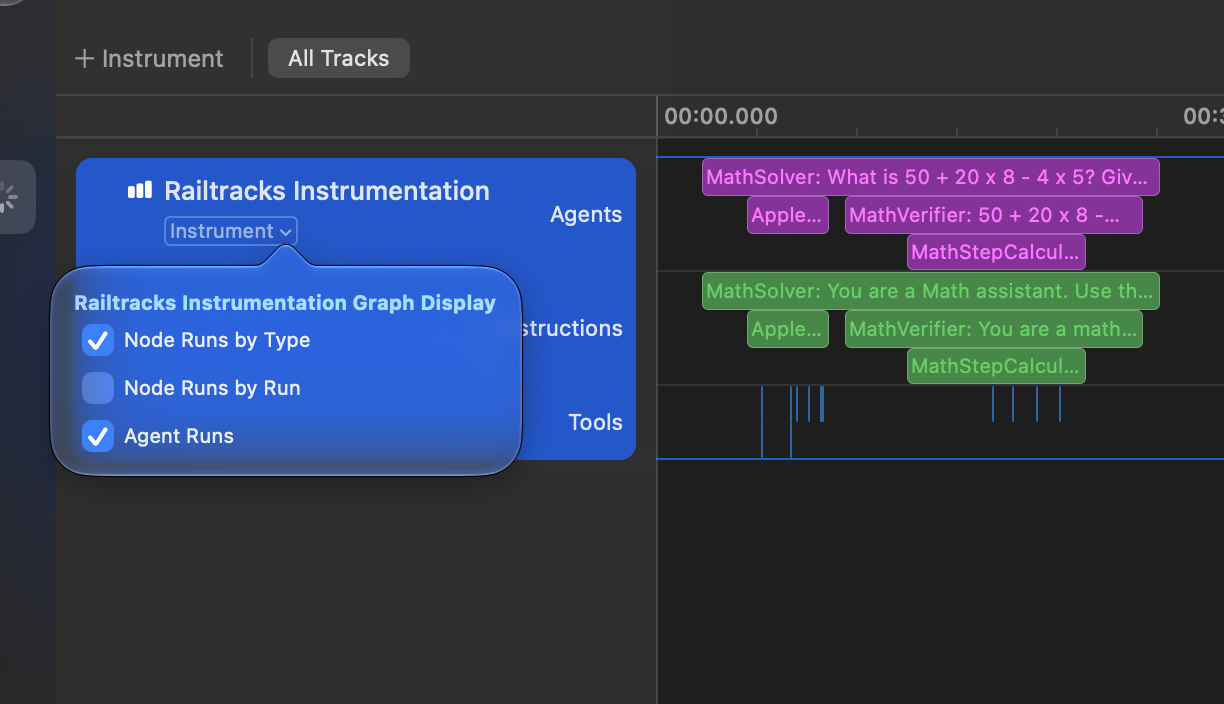
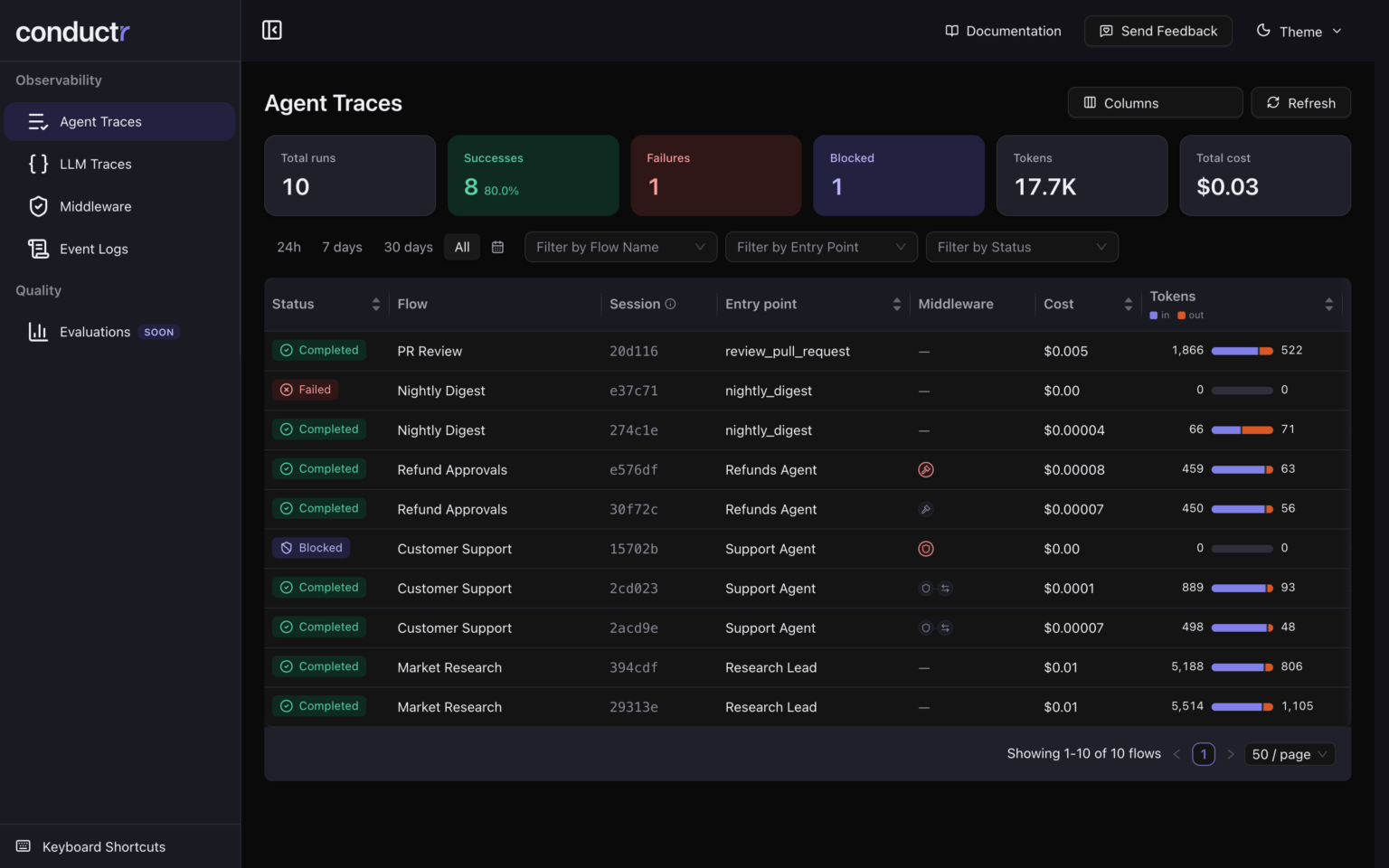
Together, Railtown’s stack creates a continuous lifecycle: Build → Understand → Deploy → Observe → Improve.
- Build: Create agents, tools and workflows in native Swift with Railtracks for Swift
- Understand: Trace every agent run step-by-step as you develop, before anything ships.
- Deploy: Ship agents inside your Apple app, not behind someone else’s server.
- Observe: Monitor what agents do in production with Conductr
- Improve: Evaluate agent behaviour and turn what you learn into better agents.
Lessons from the App Store
Apple has solved a trust problem before. The App Store’s review standards and clear permissions helped people trust third-party software by default. Agents need the same shift: evaluation before they ship, boundaries on what they can touch, the user’s permission before they act and visibility into what they did. Small businesses feel this the most. They need applications built to rigorous standards for reliability, privacy, security and accountability, and Railtown’s infrastructure is designed to help developers meet that bar.
For enterprises, Railtown is also developing an architecture for visibility and governance across agentic applications from multiple developers, with clear boundaries between enterprise information, individual privacy and developer IP.
Why the Apple Ecosystem
Personal agents need context across devices. Enterprise agents need security and governance. Developers need native frameworks. Users need confidence that autonomous software stays private and understandable. Railtown believes few ecosystems bring those together as naturally as Apple’s, and that some of the most important agentic applications of the next decade will be built there.
AI isn’t valuable because it’s impressive. It’s valuable when it works reliably, in production, and can be trusted.
Not sure where to start?
Reach out to Railtown here to learn how Railengine can ground your agents in the data you already have.