The next battle in enterprise AI isn’t just about who builds the smartest models. It’s about who owns the intelligence that makes a business valuable.
AI sovereignty is becoming one of the most important strategic considerations for businesses adopting artificial intelligence.
And I’m not talking about national sovereignty, where data resides geographically, or which country controls the infrastructure. I’m talking about enterprise sovereignty.
The ability of a business to retain ownership and control over its data, knowledge, intellectual property, AI agents, and the intelligence generated as those agents operate.
As companies race to adopt AI, I believe many are overlooking a fundamental question: Are we building AI capabilities that strengthen our business, or are we gradually transferring our competitive advantage to someone else?
A Warning Worth Taking Seriously
Alex Karp, CEO of Palantir, has been vocal about the risks of businesses becoming overly dependent on foundation model providers such as OpenAI and Anthropic.
His concern goes beyond data privacy.
It’s about what he calls a company’s alpha: the proprietary knowledge, operational processes, and intelligence that distinguish one business from another.
The concern is that as companies integrate their most valuable information and workflows into external AI platforms, they may create dependencies that ultimately weaken their control over those assets.
I think this is an important conversation, and one that every business leader should be having.
To be clear, this doesn’t mean that AI providers are necessarily taking customer data or using it to train competing products. Enterprise agreements, data-handling policies, and technical safeguards matter.
But sovereignty is about more than trusting a vendor’s current policies. It’s about designing your architecture so that your business remains in control, regardless of how the technology landscape evolves.
We've Seen This Pattern Before
There’s an interesting parallel in the history of personal computing.
In the early days of PCs, entire businesses were built around add-on components and capabilities.Networking cards, sound cards, graphics capabilities, and other specialized hardware created valuable markets for independent vendors.
Over time, many of those capabilities became standard features integrated into motherboards, chipsets, and processors.
What once represented an independent product category became part of the underlying platform.
Intel and other major platform vendors played important roles in that evolution.
This wasn’t necessarily bad for consumers. Integration made computers cheaper, simpler, and more accessible. But for businesses whose competitive advantage depended entirely on those add-on capabilities, the economics changed dramatically.
What happens when the platform you depend on decides that your differentiation should become a built-in feature?
I see a similar possibility emerging in AI.
Today’s foundation model providers are rapidly expanding beyond models into agents, tools, workflows, enterprise integrations, and applications.
Capabilities that are differentiated products today may become native platform features tomorrow. That doesn’t mean businesses should avoid these platforms. It means they need to think carefully about where their competitive advantage lives.
Your Enterprise Intelligence Has Three Layers

When we talk about protecting enterprise AI, the conversation often starts and ends with data.
But I believe there are three distinct layers of business intelligence that companies need to protect.
1. Your Data and Knowledge
This is the foundation.
Your proprietary documents, customer information, historical decisions, internal processes, business rules, and accumulated institutional knowledge. It’s the context that makes AI useful to your organization.
Without it, even the most sophisticated model is largely generic. Your knowledge should remain under your control, with clear ownership, access policies, retention rules, and portability.
2. Your Agents and Business Logic
This is where things become particularly interesting.
An AI agent is not simply a prompt sent to a language model. Increasingly, agents encode how a business operates. They contain instructions, workflows, tools, integrations, decision logic, specialized knowledge, and orchestration.
Over time, companies will invest substantial resources teaching agents how to perform their most valuable work. Those agents become a new form of intellectual property.
Your agents are not just software. They are increasingly an executable representation of your business expertise.
Companies should own those definitions and capabilities, and retain the freedom to run them across different models, infrastructure environments, and platforms.
3. Your Agent Execution Intelligence
This is the layer I believe is most frequently overlooked.
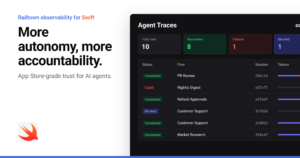
Every time an agent runs, it can generate valuable operational intelligence.
What did the agent do? What information did it retrieve? Which tools did it call? What decisions did it make? Where did it fail? What corrections were required? What outcomes were achieved? Across thousands or millions of executions, this becomes an incredibly valuable record of how a business operates.
It can reveal bottlenecks, recurring problems, customer needs, successful decisions, and opportunities for improvement. This isn’t merely logging or observability.
It’s a continuously growing body of business intelligence.
And as agents become more autonomous, this execution history may become as strategically valuable as the original knowledge used to build them. Businesses should think carefully about who owns this information, where it is retained, and who can derive value from it.
Sovereignty Doesn't Mean Isolation
I don’t believe every company needs to build its own foundation model, operate its own data centres, or abandon cloud AI. That would be impractical for most businesses.
The leading model providers are delivering extraordinary innovation, and enterprises should absolutely benefit from it. But there’s an important distinction between using a technology provider and making that provider the permanent owner or gatekeeper of your business intelligence.
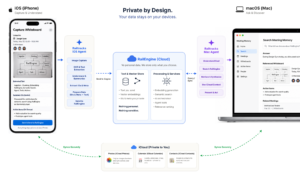
A sovereign enterprise AI architecture should allow companies to choose their models, control their knowledge, retain ownership of their agents, govern execution, and preserve their operational intelligence.
It should also provide the freedom to change providers as technology, economics, and business requirements evolve.
The goal isn’t independence from every vendor. It’s independence from any single vendor becoming indispensable to your competitive advantage.
The Question Every Business Should Ask
At Railtown AI, this philosophy influences how we think about building and operating agents.
We believe businesses should retain control over the knowledge they build, the agents they develop, and the intelligence generated through their execution.
The models will evolve. The infrastructure will evolve. The platforms will evolve.
But the intelligence that makes your business unique should remain yours.
As AI moves from answering questions to executing real business processes, sovereignty will become increasingly important.
The organizations that succeed won’t necessarily be the ones using the most powerful model. They’ll be the ones that understand what makes their business valuable and build their AI strategy around protecting and compounding that value.
Your data is your asset. Your agents are your intellectual property. Their execution is your business intelligence.
Protect all three.